

ItEmail is a critical communication tool for businesses, but it is vulnerable to spoofing, phishing, and spam attacks. Implementing email authentication methods helps secure your messages, improve deliverability, and protect your brand reputation.
The three main email authentication protocols are SPF, DKIM, and DMARC. Understanding how they work ensures your emails reach inboxes safely and are trusted by recipients.
What Is SPF?
SPF (Sender Policy Framework) is a method that specifies which servers are authorized to send emails on behalf of your domain.
When an email is received, the recipient’s server checks the SPF record to verify that the sending server is allowed. If it is not listed, the email may be marked as spam or rejected.
Benefits of SPF:
-
Prevents email spoofing
-
Reduces spam and phishing risks
-
Improves email deliverability
SPF is essential for all businesses that send email from their own domains.
What Is DKIM?
DKIM (DomainKeys Identified Mail) uses encryption to attach a digital signature to outgoing emails. This signature is verified by the recipient’s server to ensure the email has not been altered during transit.
Benefits of DKIM:
-
Confirms email authenticity
-
Ensures message integrity
-
Protects your domain from being used in phishing attacks
DKIM works alongside SPF to provide a higher level of trust for your emails.
What Is DMARC?
DMARC (Domain-based Message Authentication, Reporting & Conformance) builds on SPF and DKIM by specifying how receiving servers should handle unauthenticated emails.
DMARC allows you to set policies such as:
-
None – Monitor emails without taking action
-
Quarantine – Send suspicious emails to spam
-
Reject – Block emails that fail authentication
also provides reports so you can monitor email activity and detect unauthorized use of your domain.
Benefits of DMARC:
-
Prevents email spoofing and phishing
-
Protects your brand reputation
-
Provides visibility into email traffic
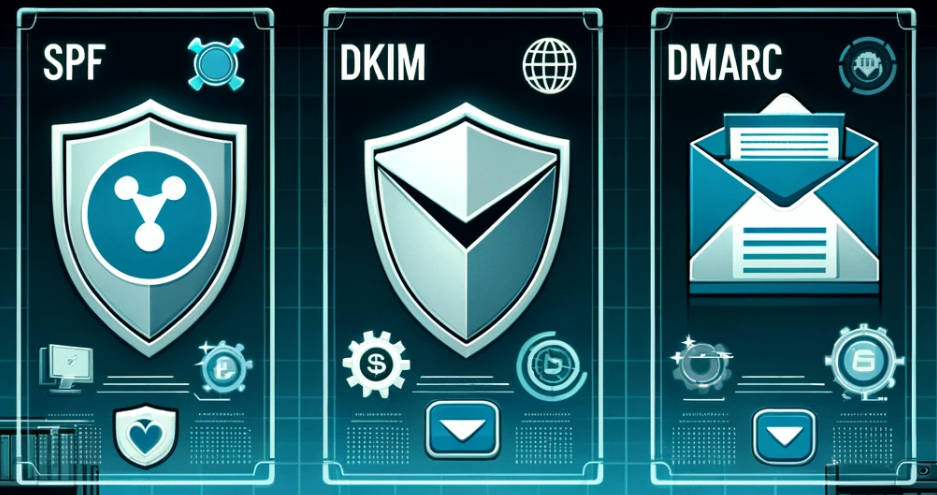
How SPF, DKIM, and DMARC Work Together
-
DKIM ensures the email content has not been altered.
-
DMARC defines policies for handling unauthenticated messages and generates reports.
Together, these protocols form a layered email authentication system, improving security and trust for all emails sent from your domain.
Best Practices for Email Authentication
-
Set up SPF with all authorized mail servers listed.
-
Enable DKIM signatures for outgoing emails.
-
Implement DMARC with monitoring first, then enforce stricter policies over time.
-
Monitor DMARC reports regularly to identify unauthorized email use.
-
Keep records updated when adding new mail services or platforms.
Following these best practices ensures your emails are secure, delivered reliably, and protected from misuse.
Final Thoughts
Email authentication with SPF, DKIM, and DMARC is essential for modern businesses. It prevents spoofing, phishing, and spam, while improving email deliverability and protecting your brand.
Implementing these protocols may seem technical, but the benefits in security, trust, and professional communication are significant. By taking these steps, your emails become a reliable tool for engaging customers and maintaining your online reputation.